Village life is simple, pure, peaceful, and close to nature. This is exactly why “My Village” shows up in exam papers, homework, and school speeches every single year. Below, you will find ready-to-use paragraphs for Class 1-2, Class 3-5, and Class 6-8. Plus tips so that you can write all on your own.
What Should Go in a My Village Paragraph?
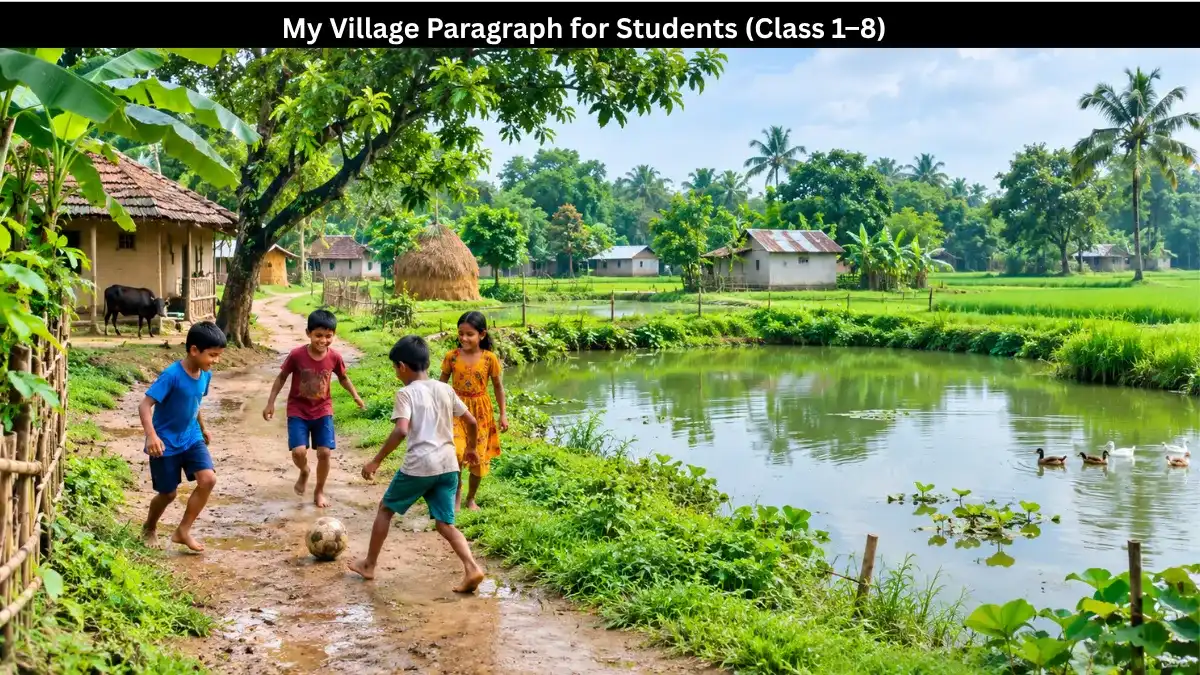
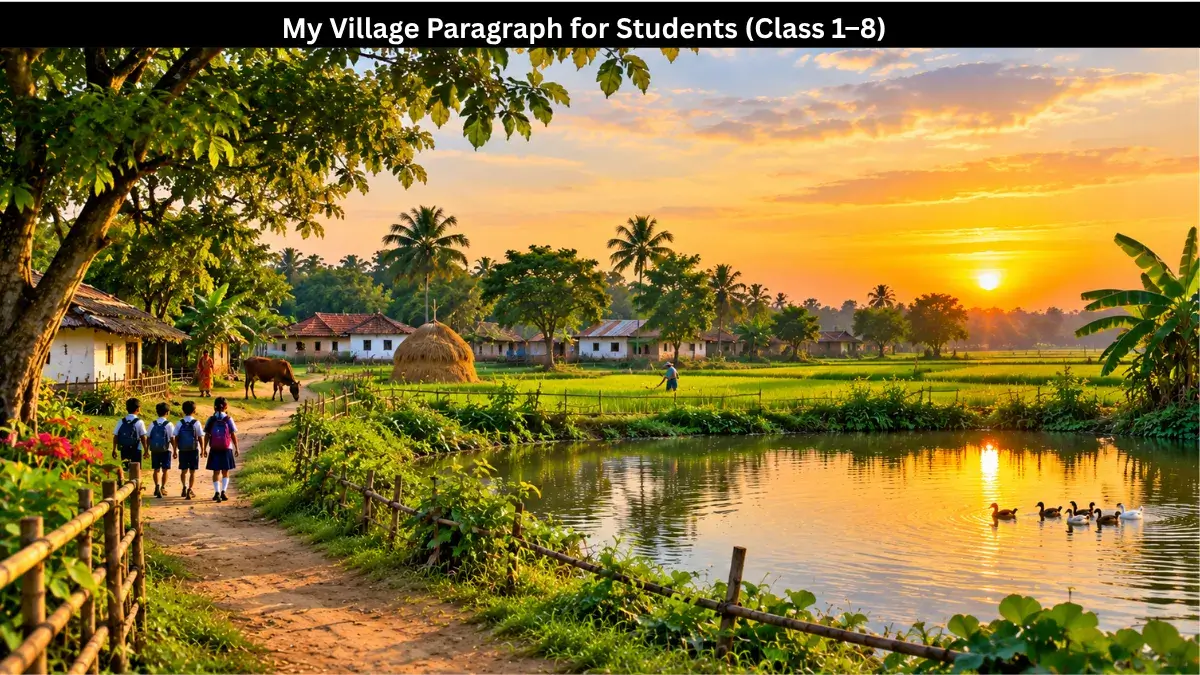
A good “My Village” paragraph describes where your village is, what it looks like- fields, ponds, trees, mud paths, farmland, and playing grounds- who lives there, what the neighbors are like, the village school, and how daily life feels. Keep it short and simple, within 5 to 8 sentences, and end with why you love it.
What You’ll Find in This Guide
- Three ready paragraphs are included: Class 1–2 (short), Class 3–5 (medium), Class 6–8 (detailed).
- A step-by-step method helps students write confidently.
- Real facts from India, Bangladesh, and Pakistan add authentic detail.
- Teachers pick this topic because it can test a student’s observation.
Why Do Teachers Love This Topic?
Teachers assign “My Village” because every child, even those who have visited the village for once, can easily picture it. It needs no textbook knowledge or copy-paste skill; what is needed is only memory, observation, and honest words.
That topic also builds a skill that matters far beyond exams: describing what you see in a logical order. That skill will help you write a decent essay, write reports, or even answer interview questions.
Here is something important that you should notice: villages are not a small or shrinking part of life in South Asia; most populations are counted from rural regions. According to the 2011 Census, 68.8% of India’s population lives in rural areas, and India recorded 6,40,867 villages in that same census. So, writing about “My Village” is about the reality where most people live; it is not an exception.
What Students Learn From Writing This Paragraph
Writing about a village trains three things at once: observation, sequencing, and emotional honesty. A student who can order details – location, surroundings, people, daily life, feelings – has already learned the basic shape of an essay.
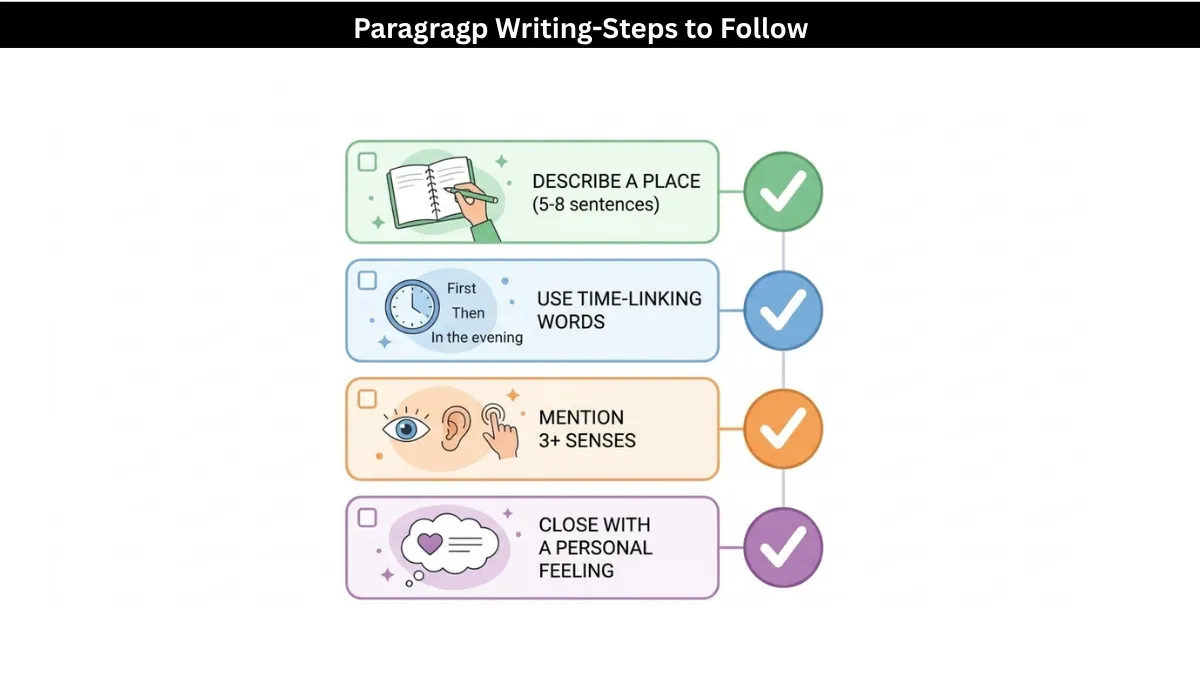
By the end of practicing this topic, a student should be able to:
- Describe a place using 5–8 clear sentences.
- Use simple linking words (first, then, in the evening) to show time.
- Mention at least three senses (what they see, hear, or feel).
- Close with a personal opinion or feeling.
My Village Paragraph for Every Class
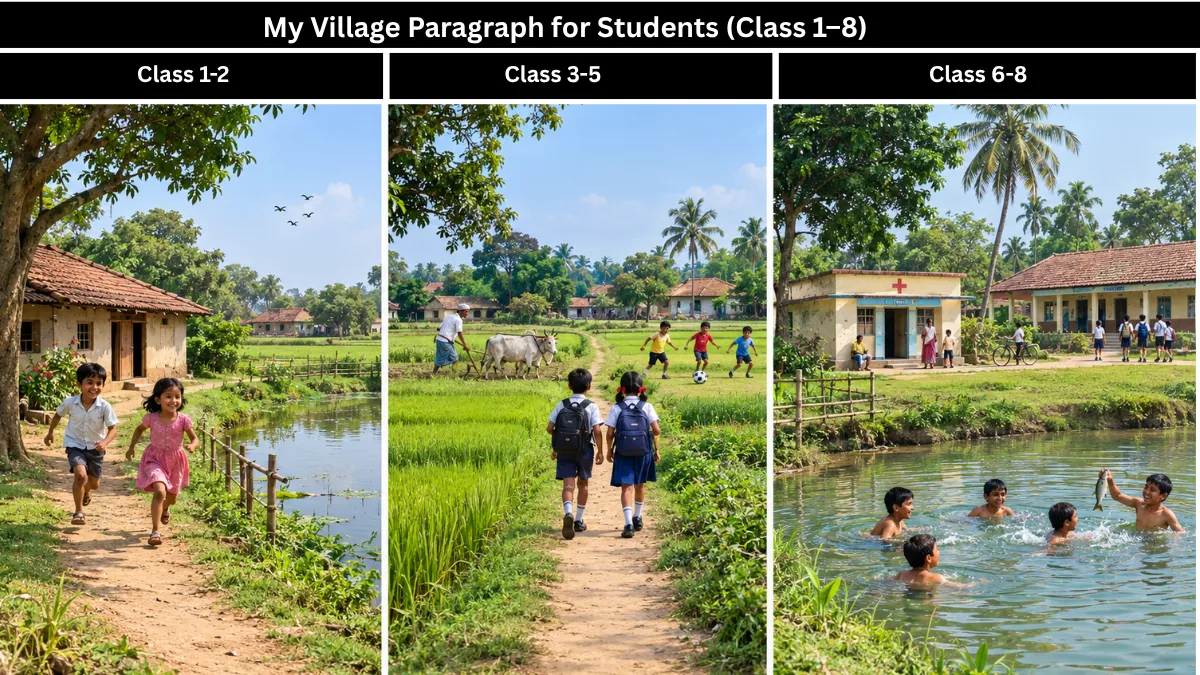
My Village Paragraph for Class 1–2 (Short & Simple)
My village is small, quiet, and beautiful. I love my village very much. There are many trees and green fields around my house. Ponds and mud paths surround my home. People in the village are kind and friendly. In the morning, I hear birds singing. In the evening, children play together in the field. Life here is simple and happy, and I feel safe when I stay in my village.
My Village Paragraph for Class 3–5 (Medium Length)
My village is a place where I feel happy and free. Green fields, ponds, small roads, and fresh air surround it. Most people here know each other and help one another during difficulties. Farmers work hard in the fields, and children walk to the nearby school every day. After school, we play in the field and talk with our neighbors. We celebrate festivals together and have plenty of fun. My village has taught me kindness, sharing, respect for elders, and the value of a simple life.
My Village Paragraph for Class 6–8 (Detailed)
My village is a peaceful place where nature and people live in harmony. It is not very big, but it is full of life and warmth. Farms, ponds, and trees make the surroundings calm and beautiful. The villagers are hardworking and honest, and they share a strong sense of unity. Daily life here is simple, yet it carries deep values – people follow old traditions while slowly accepting new ideas too. There is a small health center and a school in my village. Children love to bathe and play in the ponds, sometimes catching fish for fun. Living here has taught me respect, patience, and love for nature.
Before You Start Writing: What You Need
You do not need any fancy words for this paragraph to prove your writing skills; just a clear picture in your memory. Think of your village(or one you have visited) and note down two or four things you remember most.
Keep in mind:
- No complicated sentence or vocabulary is required;
- Using simple present tense works fine.
- Real memories work better than copied documents.
- 60-150 words is enough for most school assignments.
How to Write Your Own My Village Paragraph (Step by Step)
Follow this order, and you will be able to build a good paragraph.
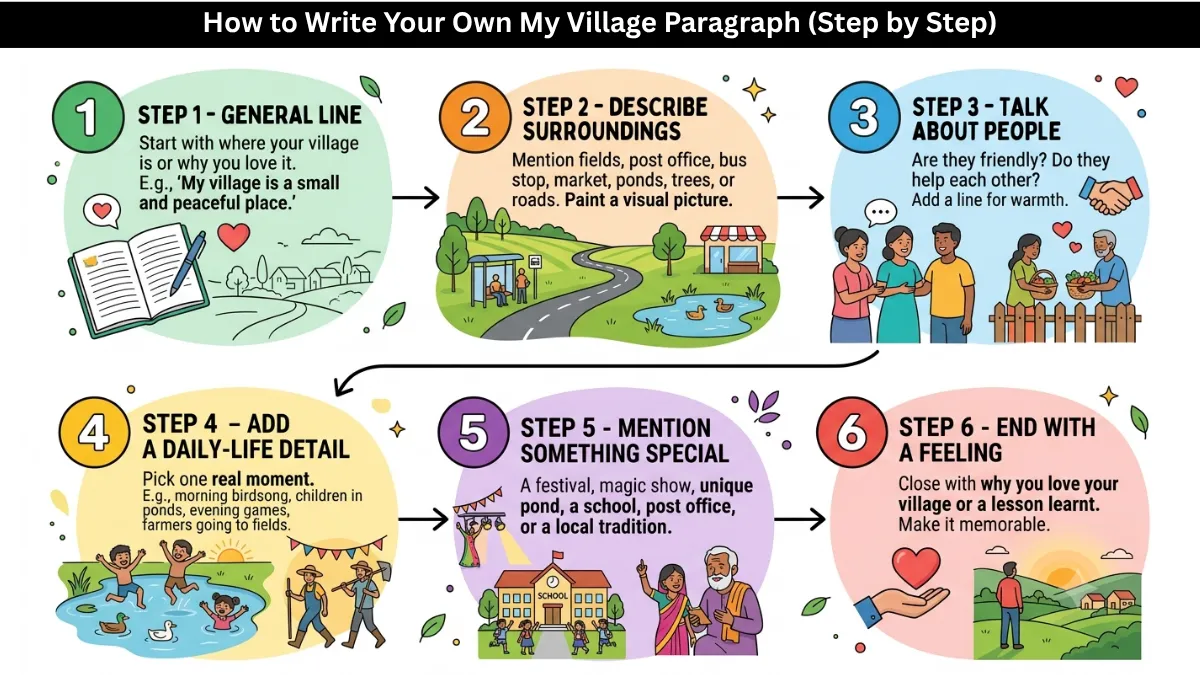
Step 1 – Start with a general line. Say where your village is or simply that you love it. Example: “My village is a small and peaceful place.”
Step 2 – Describe the surroundings. Mention fields, village post office, bus stop, marketplace, ponds, trees, or roads. The readers will be able to draw a picture of the village you talked about.
Step 3 – Talk about the people. Are they friendly? Do they help each other? A line here adds warmth to the paragraph.
Step 4 – Add a daily-life detail. Morning birdsong, children jumping into ponds, evening games, farmers heading to the field – pick just one moment that feels real to you.
Step 5 – Mention something special. A festival, magic show in an open field, a pond, a school, a post office, or a tradition unique to your village works well here.
Step 6 – End with a feeling. Close with why you love your village or what lesson you learnt. This is the line teachers remember.
Real Village Facts Worth Knowing (For Extra Marks)
Adding one fact can make a paragraph truly unique from others. Here are a few accurate, source-checked details students across India, Bangladesh, and Pakistan can use:
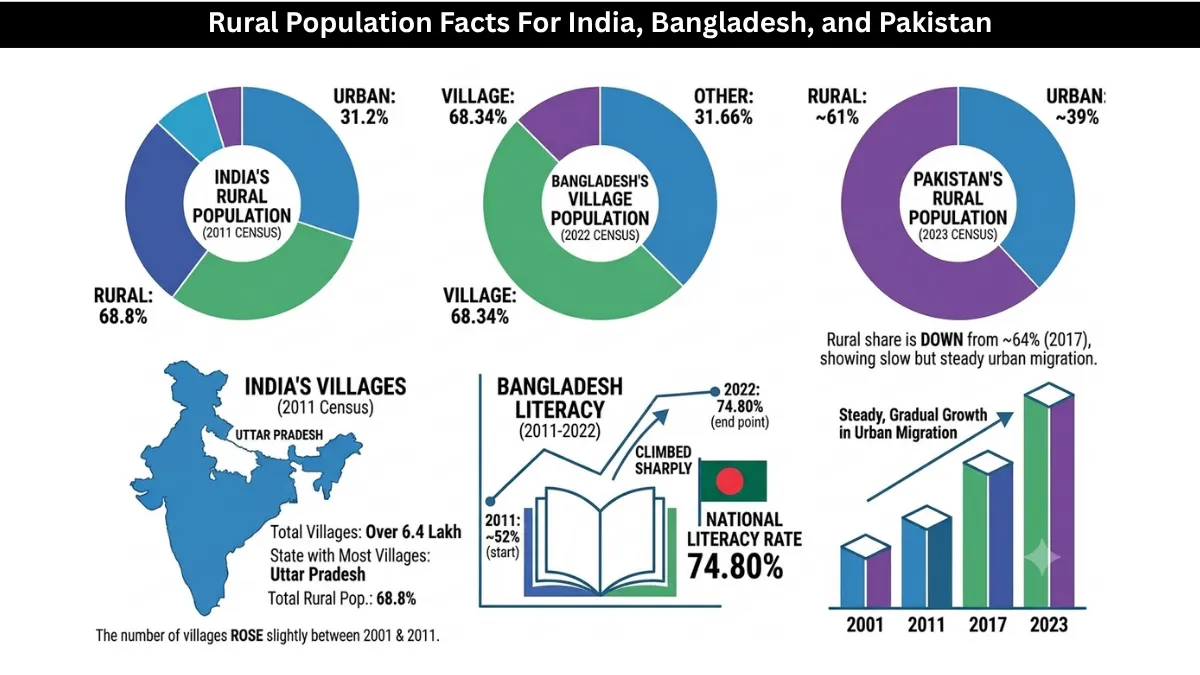
- India’s 2011 Census recorded 68.8% of the population living in rural areas, spread across over 6.4 Lakhs villages, with Uttar Pradesh having the most villages of any state.
- The 2022 census of Bangladesh found that 68.34% of the population still lives in villages, showing that most people stay in villages.
- Bangladesh’s rural literacy rate climbed sharply, with the national literacy rate reaching 74.80% in the 2022 census, up from around 52% in 2011.
- Pakistan’s 2023 census recorded a rural population share of about 61%, down from roughly 64% in 2017, showing steady but gradual urban migration.
- The number of villages in India actually rose slightly between the 2001 and 2011 census counts, showing villages aren’t disappearing – they’re growing too.
These facts work well as a closing line in a Class 6-8 paragraph, e.g., “Even today, most people in our country still live in villages like mine.”
Why You Can Trust This Guide
This guide was written and checked using verified census data from India, Bangladesh, and Pakistan’s own statistics bureaus, not guesswork.
Every paragraph is tested separately depending on the different age groups of students in Class 1 to Class 8. The sentence structure and vocabulary used are student-friendly, and they can actually use them.
The goal is simple: give students an honest, exam-ready paragraph and a repeatable method – not a one-time copy-paste answer.
Conclusion
“My Village” remains one of the easiest yet most meaningful topics a student can write about. It needs no difficult words or any complex sentences to describe your honest observation – this is actually good from a study angle for students in Class 1 to Class 8. With the ready paragraphs and six-step method above, any student can turn the blank page into a confident, well-rounded answer.
Frequently Asked Questions (FAQ)
Q1. Is the topic 'My Village' helpful for students?
Yes. It helps students improve observation skills, sentence structure, and express what is going on in their minds confidently.
Q2. How long should a My Village paragraph be for Class 1–2?
Around 60–80 words is enough – five to seven short, simple sentences work best for younger students.
Q3. Can a student who lives in a city write this paragraph?
Yes, students can write about their grandparents’ village, a village they visited, or imagine a village using the same structure.
Q4. What is the ideal word count for Class 6–8?
Between 120180 words will work best, adding small details and ending with a closing reflection.
Q5. Should students memorise the paragraph or write their own?
Using the given model is fine, but changing a few personal details, like the name of the village and one or two memories, will make the paragraph genuine to teachers and examiners.
Ready to Practice?
Pick the paragraph for your class, read it once, then try writing your own version using the six steps above. Share it with a teacher or parent for quick feedback. Or, if you feel you can, also try to understand from a few more examples given: “My School”,”My Favorite Food”, “ My Classroom”, “My Daily Routine”.
📖 Join 500+ parents & students
Daily essays, worksheets, and writing tips on Telegram.

I am not a professional writer. I do not have a degree in English literature. What I have is 10 years of watching children learn, a son in Class 4 who still asks me to help with his writing, and a genuine belief that every child has something worth saying- they just need the right guide.